

01
Identify the Pattern
Every campaign starts with a repeating pattern in your market's search — location + service, product + comparison, feature + use case.
WpBulkPublishing is the ecosystem built entirely around programmatic SEO — the software, framework, case studies and done-for-you services in one connected system. Ship pages on WordPress with our plugins, or on Lovable, Bolt.new, Replit, Framer, Webflow, Next.js and custom stacks via our tools, MCP servers, APIs and services.
No credit card required · Free plan available · Map your million-page roadmap together

Programmatic SEO
Ship thousands of pages that rank in classic Google without triggering thin-content flags.
ExploreProgrammatic GEO
Generative Engine Optimization — get cited inside ChatGPT, Perplexity and Gemini answers.
ExploreProgrammatic AEO
Answer Engine Optimization templates that win People Also Ask and featured snippets.
ExploreProgrammatic AIO
AI Overview-ready templates with evidence, sources and schema baked into every page.
ExploreThe companies that built empires with programmatic SEO


Programmatic SEO — also called pSEO — is the practice of publishing large numbers of web pages at scale using structured data, reusable templates and systematic workflows rather than writing each page by hand. Instead of ten pages a week, a programmatic system can produce ten thousand pages in the same time — each one unique, optimized and genuinely useful.
Most businesses need to rank for hundreds or thousands of queries that follow a predictable pattern. A real-estate portal needs a page for every city, neighborhood and property-type combination. A SaaS company needs a page for every integration, comparison and use case. Writing each of those pages by hand is not a strategy — it's a bottleneck.
Programmatic SEO removes the bottleneck. Define the template once, connect the data once, set the quality standards once and publish at whatever scale your strategy demands. Every page is unique because every row is different. Every page is optimized because the template enforces SEO structure. Every page earns trust because the quality controls run before anything goes live.
This is not a shortcut. It is a system. Zillow, Airbnb, Zapier, Tripadvisor, Canva and NerdWallet did not write their way to dominance — they built systems that wrote for them. WBP is the infrastructure layer that brings that approach to WordPress.
Quick Definition
In plain words.
What it is NOT
Spam. Thin content. Keyword stuffing. Auto-generated garbage. Done correctly, every page is genuinely useful — it just got published faster than a writer could.
What it IS
Publishing hundreds or thousands of unique, structured web pages from a data set and template system — optimized for search, AI platforms and real users.
Who uses it
Agencies · SaaS · E-commerce · Real estate · Job boards · Travel · Local services · Publishers · Enterprise teams
Also known as
pSEO · Programmatic content · Scaled SEO · Bulk publishing · Data-driven SEO · Large-scale content
Swipe through the full workflow from pattern to compounding traffic.
WordPress is where WBP started — and it's still where most of our plugins live — but WBP is not a WordPress-only company. The same engine powers programmatic campaigns on Lovable, Bolt.new, Replit, Framer, Webflow, Next.js and fully custom stacks through our tools, MCP servers, APIs and services.
WordPress plugins, standalone tools, MCP servers, GPTs, APIs and services — pick the surface that fits. Same engine, same quality gates, whether you're on WP, Next.js, Framer, Webflow, Lovable, Bolt.new, Replit or a custom build.
Author templates once, then ship them to WordPress via our plugin family, or to Lovable, Bolt.new, Replit, Framer, Webflow and custom stacks via our tools, MCP servers and APIs.
Cloudflare, CDN, edge caching and object caching keep millions of programmatic pages fast — on WordPress, on JAMstack builds and on custom-coded sites alike.
CSV, Google Sheets, Airtable, Notion, REST APIs, databases — any structured source, no format restrictions and no CMS lock-in.
OpenAI, Anthropic, Gemini and Perplexity plug into one publishing workflow, grounded in your Knowledge Base — regardless of where the pages ultimately live.
Hooks, filters, REST API and custom post types on WordPress. MCP servers, APIs and SDKs everywhere else. When your strategy needs something off-the-shelf can't do, WBP is built to be extended.
How WBP solves it
The Quality Engine runs 20+ Google spam-policy checks before any page publishes. Content Engine generates substantive content grounded in real Knowledge Base data. Minimum-depth requirements enforced at the quality gate.
The same programmatic playbook the world's biggest brands used to dominate search — now available on whatever stack you already build on, through the WBP ecosystem.
 Case 01 / 04
Zapier published a unique landing page for every possible integration between the apps on their platform. Every "connect [App A] with [App B]" became its own indexed page with real, useful content — millions of pages targeting exact user intent.
The Framework
Seven layers, in order. Skip one and the ones above collapse into it — quality problems, indexing problems, ranking problems, all downstream of the same missing foundation.
Not just head terms — the complete pattern universe your audience uses. WBP Planner identifies which patterns are worth building around based on volume, competition and commercial intent.
Key outputs
Any business serving multiple geographic areas — a page for every city, neighborhood, state or region combination. Local services, healthcare, legal, real estate, restaurants, franchises and multi-location retail.
Example URL patterns
/electrician-in-[city]/ · /[service]-[city]-[state]/ · /best-[service]-near-[neighborhood]/
WBP tools used

Location Pages
Interactive · drag the tags around
Built for Every Industry
Programmatic SEO is not limited to any one niche. WBP has been used to build content empires in dozens of industries across every continent.
Real-estate portals, property management, law firms, medical clinics, home services and multi-location retailers all share the same problem: they need to rank in hundreds of cities and service areas. Writing each page by hand is not possible.
SaaS, AI-tool builders and app developers need feature, integration, comparison, use-case, changelog and documentation pages — all published quickly, kept current and optimized for both classic search and AI discovery.
Travel platforms, education, publishers, job boards and directories are fundamentally programmatic — their entire model depends on a page for every destination, course, listing and topic.
E-commerce sitting on large catalogs leaks organic traffic because product and category pages are thin, duplicated or not indexed. WBP connects with WooCommerce and turns product data into unique optimized pages at catalog scale.
Healthcare, law, financial services and insurance operate under Google's highest quality bar. WBP's EEAT Engine, Quality Engine and Knowledge Base publish at scale without sacrificing trust signals.
Most pSEO operations stitch together a dozen separate tools. WBP replaces them with a coordinated ecosystem where every component shares data with every other.

Keyword research, pattern identification, site architecture, page inventory and content calendar in one connected surface.

The core engine — queue, templates, variables, velocity control and controlled publishing at any scale.

AI-assisted content generation grounded in Knowledge Base data — no generic filler, no hallucinations.
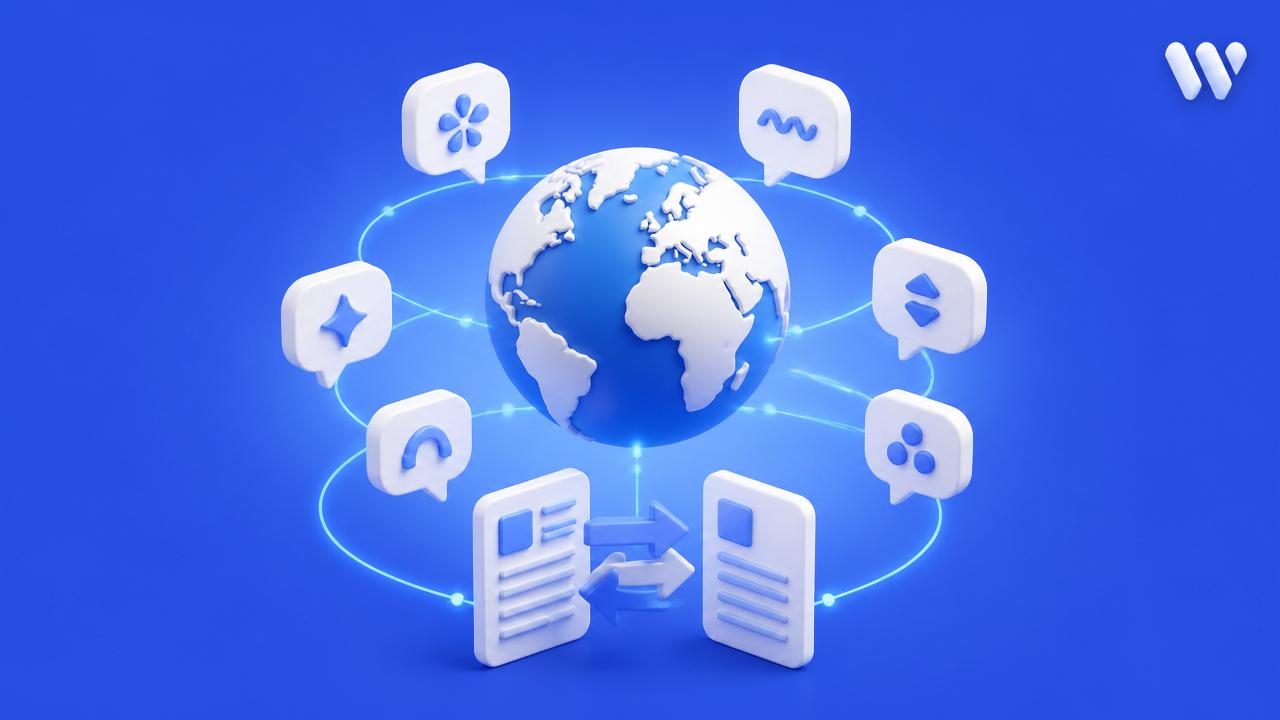
Brand data storage for grounded, accurate content at scale — every AI output speaks in your voice.

Meta tags, schema markup, sitemaps and LLM citation tracking — the full on-page SEO layer.

Experience, expertise, authority and trust signals — added automatically at the template layer.

Crawl budget, index coverage, push indexing and sitemap automation across your entire page inventory.

Pre-publish checks against 20+ Google spam policies — warn or block before anything goes live.
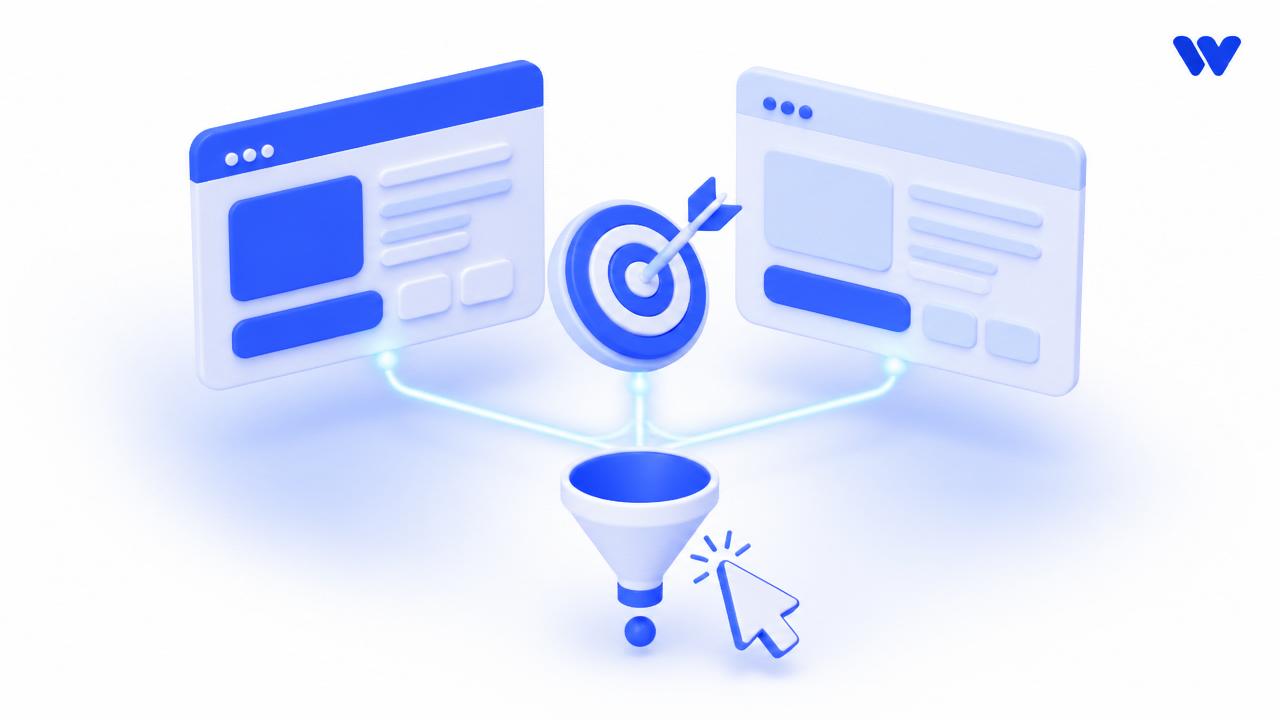
Content freshness monitoring and automatic republishing — pages stay accurate as your data changes.

Manage 50+ sites from one unified dashboard — health scores, index coverage, ranking movement, client reports.
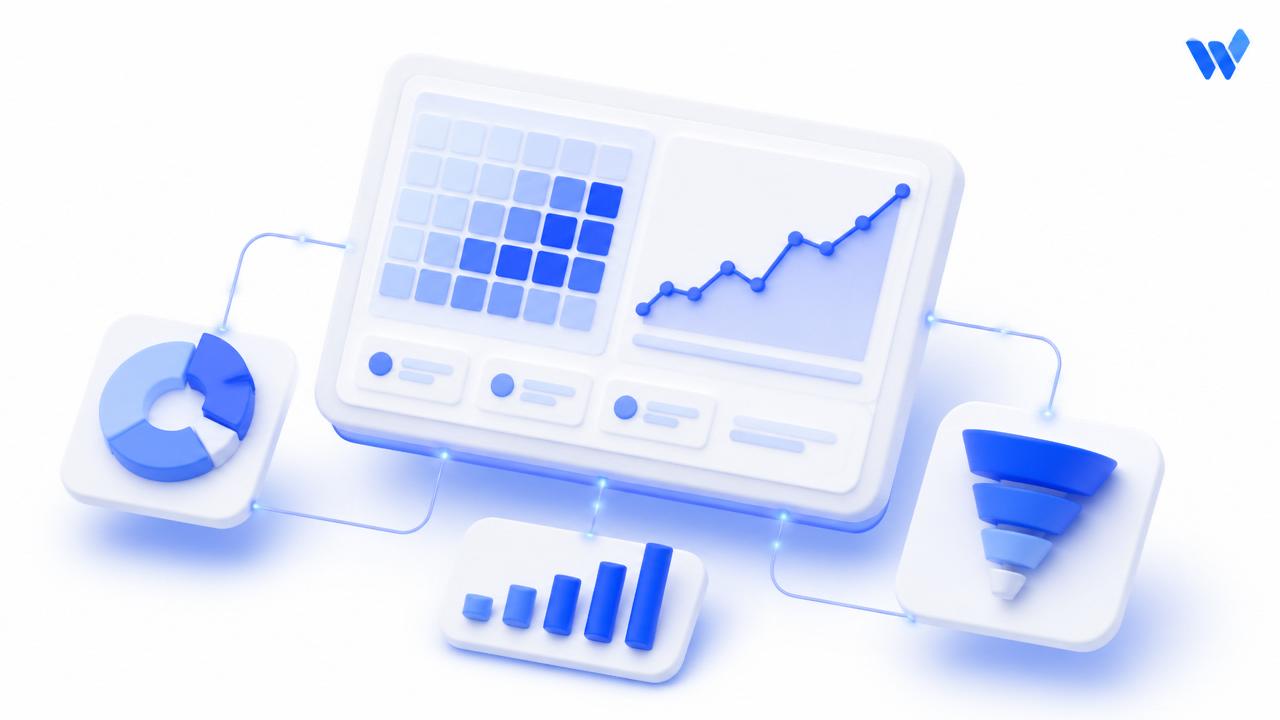
Traffic tracking, heatmaps, funnels, attribution and revenue — one number for every campaign.

Page speed, Core Web Vitals and cache management — programmatic sites stay fast at any page count.
Programmatic SEO is not a quick fix. It is a compounding investment. Here is an honest timeline.
Planning, architecture, template build, data preparation. First batch goes live.
Search engines discover and begin indexing. Impressions appear. Early long-tail rankings surface.
Pages build authority through links, engagement and time. Mid-competition rankings appear. Traffic grows measurably.
Existing pages gain authority; new pages launch faster because the domain has credibility.
Sites that maintained quality reach dominant positions. The content moat is real — competitors need years to catch up.
| Factor | Traditional SEO | Programmatic SEO |
|---|---|---|
| Content production | Written manually, one page at a time | Generated systematically from data + templates |
| Scale | Dozens to hundreds of pages / month | Thousands to millions per campaign |
| Time to first publish | Days to weeks per piece | Hours to days for thousands of pages |
| Ongoing cost | Scales linearly with headcount | Scales with data and infrastructure |
| Best for | Brand storytelling, thought leadership, opinion | Location coverage, catalogs, comparisons, directories |
| Quality control | Individual editorial review | System-level quality gates at the template layer |
| EEAT signals | Natural through author expertise | Engineered into the template system |
| Competitive moat | Difficult to scale — competitors can match | Hard to match at volume — infrastructure advantage |
Programmatic SEO
Ship thousands of pages that rank in classic Google without triggering thin-content flags.
Read the guideProgrammatic GEO
Generative Engine Optimization — get cited inside ChatGPT, Perplexity and Gemini answers.
Read the guideProgrammatic AEO
Answer Engine Optimization templates that win People Also Ask and featured snippets.
Read the guideProgrammatic AIO
AI Overview-ready templates with evidence, sources and schema baked into every page.
Read the guidePublishing a large number of pages using a template and a data set rather than writing each page by hand. You build the structure once and the data fills in the unique details for every page.
No. Programmatic SEO is a publishing methodology — a system for creating pages at scale from structured data. AI is one tool that can be used inside it, and it must be grounded, checked and reviewed to work well.
Google penalises low-quality content at scale — not scale itself. A programmatic site publishing thin, repetitive pages will be penalised. One publishing genuinely useful pages with unique data, structure and EEAT signals will be rewarded.
No. What is dying is low-quality pSEO — thin pages, AI dumps, doorway pages, keyword-stuffed templates. High-quality pSEO with unique data and real value continues to produce dominant positions.
Initial indexing typically begins within weeks. Meaningful ranking movement starts between 3 and 6 months for mid-competition terms. Dominant positions for competitive terms typically take 6 to 12 months of consistent quality publishing.
Doorway pages exist only for search engines and add no value. Programmatic pages are unique, useful pages that serve the user's intent — they just happen to be created efficiently from a data-driven system rather than written manually.
Not with WBP. On WordPress the entire workflow — research, architecture, templates, data import, publishing, indexing and optimization — runs inside a visual interface. Off WordPress, our tools, MCP servers, GPTs and APIs give you the same no-code workflow inside Lovable, Bolt.new, Replit, Framer, Webflow and custom stacks.
pSEO is simply an abbreviation for programmatic SEO. The terms are interchangeable.
Yes. A local business with 20 service areas and 10 services needs 200 pages — still far more than a manual process can produce efficiently. pSEO scales down as effectively as it scales up.
A structured data set with enough unique information to differentiate each page. Locations with local statistics, a product catalog with specifications, a list of integrations with setup details — the richer and more unique your data, the better your pages perform.
Start Building Your Content Moat
Every competitor ranking above you got there by publishing more relevant pages, more consistently, with better quality signals. WBP is the system to change that — starting today, on whatever stack you already ship on, for free.
